Vail Little Eagle Incident - Colorado Passenger Tramway Safety Board finds installation error
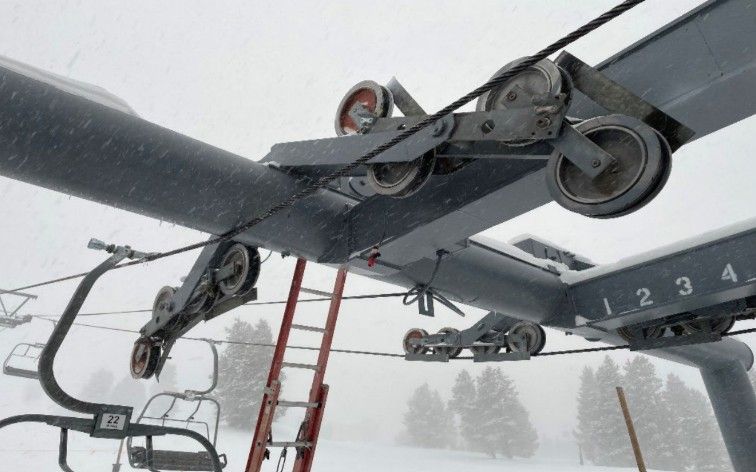
Background On Sunday, January 25, 2026, at 12:12pm, Brooks Beal, Supervisory Tramway Engineer (STE) for the Colorado Passenger Tramway Safety Board (CPTSB), was verbally notified by phone call of an incident by Phil Patterson, Lift Maintenance Director from Vail Resort. Mr. Patterson indicated that he had been informed that a deropement had occurred at Tower 1 on the Little Eagle #15 Chairlift (VA-053) resulting in two passengers being ejected from the chair who were identified as uninjured. At that time, Vail staff were locking out the lift and preparing to begin a rope evacuation of the passengers. Vail locked out the lift and initiated a rope evacuation at 12:40pm. Brooks Beal, STE, arrived on site around 4:15pm. Conditions were overcast, snowing and cold, approximately 6 degrees F. Upon arrival at Vail, the lift was found to be in a powered down and “locked-out” condition. The lift had not been disturbed after the incident, with the exception of locking and tagging out the equipment for the evacuation. The rope evacuation had been completed at 1:30 pm. It was reported that 40 passengers were on the ropeway at the time it stopped and had been evacuated with no injuries. CONCLUSION OF INVESTIGATION The incorrect installation of the 4N pair bar, likely during the lift construction in 2007 caused swing clearances to be reduced to an amount below what is required by ANSI B77.1. In this condition, a combination of a misload, a chair that was loaded to the inside, and likely a skier who looked over their shoulder and their skis pulling the chair to the outside allowed the chair swing limiter to contact and catch up on the cable catcher. This hanging-up caused the carrier to stall and the haul rope to slip through the grip, causing energy to be stored up from haul rope tension while the lift was driving to a stop. The release of that stored energy caused the passengers to be ejected from the carrier. Thankfully, the passengers’ skis were still on the snow, and they were not seriously injured. Recognizing that the sheave train was not installed correctly for the 4N configuration proved to be extremely difficult. Until the clearances were physically measured, there was no indication of a lack of clearance, and the physical difference between the configurations is very difficult to visually observe. As the sheave train was installed incorrectly during the lift relocation, it would have been very difficult for CPTSB Inspectors or Vail lift maintenance to recognize that it was installed incorrectly without performing physical measurements. As part of the relocation and addition of the sheave trains in 2007, clearances should have been reviewed by the design engineer/installer at the time of installation. |
|

ropeways.net | Home | Ropeways | 2026-08-17
 Back
Back Add Photos
 Print
PrintMore articles:
Skidata: One Call, One Provider - The Mountain eCommerce System That Actually Works
2026-08-26
Google Adsense