Constructions Final Frontier: How Layton Builds Luxury in the Wests Most Remote Places
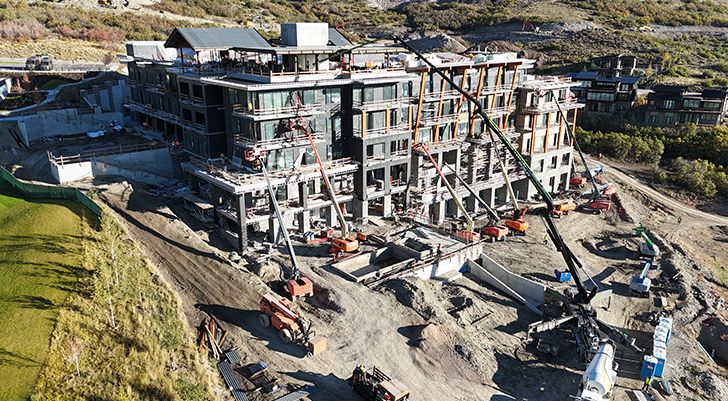
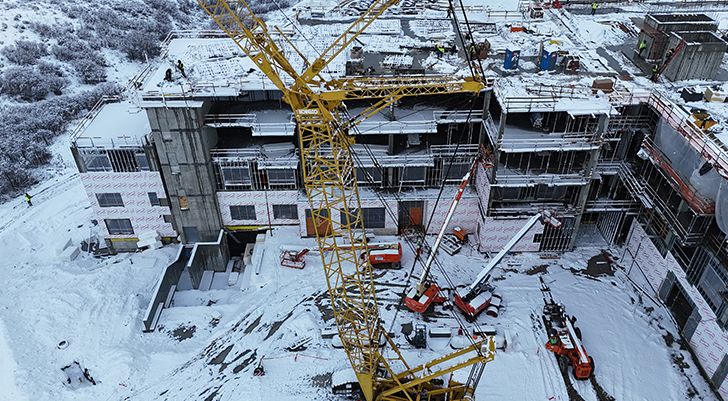
From a ski-lift commute at 9,200 feet to a mountainside spring that wouldn’t stop flowing, high-end mountain projects challenge nearly every part of the build. Here’s how Layton gets it done. “It was always dark,” said Layton Construction Project Manager Eric Boyce, describing his morning commute to The Nest at Snowbird in Utah. “It was cold, often in the negatives, and all you could see was your feet dangling in front of you and this one little safety bar.” Every morning, each member of the project team rode the two-person Mid-Gad ski lift to the site at 9,200 feet. “If you forgot something in your truck, you were 15 minutes down, 15 minutes back up,” said Layton Project Manager Cory Hurst. Projects like The Nest are in growing demand. Global mountain and ski resort markets are projected to grow from $17.5 billion in 2025 to $49.2 billion by 2035, as resorts shift from seasonal ski areas to year-round destinations. Owners are investing in luxury lodges, residences, and dining experiences in places where just getting a construction crew to work is a feat. Building in remote places, especially at elevation, tests nearly everything: logistics, weather, equipment, materials, and the crews themselves. Across three mountain projects in Utah and Colorado and one in California wine country, here’s how Layton takes on everything the mountain throws its way. The Nest: Building Where Only the Ski Lift Goes The Nest was designed to provide one of the most stunning on-mountain dining experiences on the continent. It features 145 floor-to-ceiling Swiss glass panels, a heated outdoor deck with space for 90 diners, and room inside for another 355. Getting up there to build it was only the first challenge. Clients like Snowbird rely on a contractor’s promise to deliver on time. With peak season in the winter, they can’t afford delays, so every step had to be planned around the mountain and its unique conditions. A Supply Chain Built on Snowcats Every piece of material made the same trip to the site. “To get their materials up the mountain, trade partners had to switch material from their delivery truck onto a Snowbird snowcat and tie it down. And then snowcats would haul it all up every single day,” said Hurst. At the top, there was little room to stage anything, so deliveries were timed to the work. “We didn’t have a ton of lay down area up there, so materials had to be brought up and placed immediately,” said Boyce. “The way we scheduled the deliveries, the work, and coordinated with the trade partners was more delicate than a more typical project.” High-end finishes that couldn’t be installed right away needed protection from the cold. “We had a 75-degree building the whole winter with all of our materials,” said Hurst. Thin Air, Thinner Margins The thin air affected the equipment as much as the crew. A naturally aspirated engine loses roughly 3% of its power for every 1,000 feet of elevation. At The Nest, that adds up to more than a quarter of its power. “At high altitudes, you get less output from your engines,” said Boyce. “Our front-end loaders and our forklifts struggled to have the same amount of power just because the air is thinner.” The team built contingency plans around those limits to keep the schedule on track. Safety was at the center of it all. The nearest hospital sat two miles and 1,800 feet of elevation down the mountain and 40 minutes through the canyon on a good-weather day. “We had to make sure that everybody was looking out for one another, constantly making sure nobody was getting altitude sickness. At 9,200 feet everything’s harder,” said Boyce. Layton wasn’t the only one looking out for safety. “In the winter, you would hear the big mortars going off all around you,” said Boyce. “Some of the guys would startle and ask ‘what is that? A huge explosion?’ But it was avalanche mitigation.” Even the wildlife became part of the daily safety briefing. Moose can be aggressive, and they regularly wandered near the site. “A moose would be walking around the stream and eating grass 100 yards away,” added Boyce. “We made sure no one got close.” Waterview: Three Seasons in an Afternoon Colorado leads the country in the snow sports economy, and its mountain towns are growing to match. In Dillon, about 70 miles west of Denver and 15 to 20 minutes from major ski areas, Layton is building Waterview Residences. The six-story mixed-use condominium development will include 80 residential units. “The jobsite sits at 9,100 feet,” explained Layton Project Manager Kellen Dudley, and if you’re traveling to the site from Denver, the elevation climbs even higher. “You start around 5,000 and get up to 11,000 feet to get through Eisenhower,” said Layton Senior Superintendent Mike Bertelsmann. “The weather can be bright and sunny on the Denver side, and a blizzard could be passing through on the other side.” During winter months, icy roads can cause major delays, and closures of the Eisenhower Tunnel or I-70 can stop crews from reaching the site. To protect the schedule, Layton wrote special requirements into its trade partner contracts. “We require them to rent homes in the area for their teams so we can guarantee the work gets done on time,” said Dudley. Materials get the same treatment. Deliveries are scheduled weeks out and stockpiled on site before the weather turns. “We got a lot of materials coming from Denver, so our guys know we got to get stuff ordered ahead of time. You can’t call today for tomorrow,” said Bertelsmann. “We have a lot of storage in the lower parking structure of the building here… so we don’t have to worry about trucks being delayed and not making it because of bad weather.” Snow brings its own daily challenge. To protect equipment and materials, the team covers them with massive snow blankets. “Snow blankets work great for us, so we don’t have to hand shovel all the snow,” said Dudley. First thing on a winter morning, cranes lift the snow-covered blankets and dump the snow in a designated area. This protects the equipment and saves the team valuable time. “We can get all three seasons in an afternoon here,” said Bertelsmann. “Storms blow in, we get sleet, snow; and then an hour later we get sun and 60 degrees. We’re prepared for it all.” The Stelle: Working with the Mountain On the north shore of Utah’s Jordanelle Reservoir, Layton is building The Stelle for SkyRidge. The 215,000-square-foot, seven-story golf lodge will include 62 units ranging from studio suites to four-bedroom condos, along with a rooftop bar for stargazing and a full-service spa. “It’s a boutique mountain lodge that’s part of Preferred Hotels and Resorts’ luxury collection,” said SkyRidge owner and managing director Tyler Aldous. The Stelle is part of a building boom across the Wasatch Back. More than 6,000 new residential units and hotel accommodations are expected around the Jordanelle and Deer Valley, with much of that growth timed for the 2034 Winter Olympics. Aldous said Layton’s experience building at elevation is why it was chosen. “We wanted somebody who had the subject matter expertise to build high-end luxury, commercial, and work in the mountains, and Layton checked all the boxes,” said Aldous. “With what Layton has done with the Montage and other marquee projects, they have the depth, breadth, resources to create success on this project.” Building Into the Hillside A top priority for The Stelle was making sure the building fit into the landscape. “We work with the topography, and so houses step down the hill as you go down,” said Aldous. To build into that slope, the team used geofoam: 1,450 8-by-4-foot blocks forming a wall 40 feet deep at a 60-degree slope. “The shoring process on The Stelle probably would have been a year, whereas using the geofoam took two months,” said Josh Haines, Layton Vice President of Operations. “Shoring to this extent is pretty unique, and it has to do with being where we are in the mountains,” said Layton Senior Superintendent Dell Willes, who has been with the company for 45 years. As crews cut into the mountainside for the footings, they also uncovered a spring. “At any given time, we probably had 5 to 6 feet worth of water up against the mat footing,” said Haines. The team quickly designed a permanent drainage solution, redirecting the water away from the property and into a grove of trees. “You wouldn’t think that you could get some water out of a rock. But we did it,” said Willes. Protecting What’s Exposed Elevation affects the finished building, too. The Stelle’s massive exterior timbers run at an angle from the second floor to the roof, fully exposed to the weather. “They’ll get everything from summer sun to winter snow, from freeze to thaw,” said Willes. According to the World Health Organization, UV levels rise 10% to 12% for every 1,000 meters of altitude. At about 6,500 feet, The Stelle gets roughly 20% more UV exposure than a site at sea level, which can fade, crack, and degrade sensitive materials like these timbers. “The timber is treated with a special stain that will protect the material for years,” said Willes. “You have to know how you’re impacted at higher elevations, and Layton has that know how,” added Haines. Beyond the Ski Slopes That expertise travels. In California’s Napa Valley, Layton is building a confidential luxury resort on a forested hillside, with more than a dozen hotel buildings, private residences, and estate home sites. Layton Senior Project Manager Nicolas Castillo calls it “a small town on a remote mountain.” The challenge was delivering that level of luxury without losing the old-growth forest that makes the site special. “To reach this level of luxury, you usually need to sacrifice some of the natural setting,” said Castillo. “But we’ve made it work here.” With limited flat ground, crews adapted their sequencing, equipment movement, and material handling to the steep terrain. The team protected the designer’s intent while making design and construction changes along the way to save as many trees as possible, even wrapping them in burlap. “Every step of the way, the trees were considered,” said Castillo. Finding a Way From a ski lift at 9,200 feet to a forested hillside in wine country, the places owners want to build are only getting more remote. Layton teams are proving that the harder the site, the more remarkable the experience can be. As Haines put it: “Here at Layton, we get it done; there’s simply no other option.” About Layton Construction Layton Construction is a privately held national general contractor, delivering predictable outcomes in commercial construction since 1953. Headquartered in Salt Lake City, Utah, Layton operates from 16 strategic offices across the United States, employing more than 2,200 construction professionals who serve diverse markets including healthcare, education, commercial office, industrial, hospitality, and multi-unit residential. Founded on the core values of honesty, unity, safety, and quality, Layton has built a reputation for excellence in complex project delivery while maintaining strong partnerships with clients, architects, and trade partners nationwide. |
|

ropeways.net | Home | Tourism | 2026-11-17
 Back
 Add Photos
 Print
More articles:
Andromeda Software Inc. Acquires Aspenware
2026-11-23
Big Sky Resort Opens New Mid-Mountain Learning Area for 2026/27 Winter Season
2026-11-20
Park City Mountain Looks to the Future of Mountain Village
2026-11-20
Google Adsense